
 EN
EN
 AR
AR
 HR
HR
 CS
CS
 DA
DA
 NL
NL
 FI
FI
 FR
FR
 DE
DE
 EL
EL
 IT
IT
 JA
JA
 KO
KO
 NO
NO
 PL
PL
 PT
PT
 RU
RU
 ES
ES
 TL
TL
 ID
ID
 SR
SR
 SK
SK
 UK
UK
 VI
VI
 SQ
SQ
 HU
HU
 MT
MT
 TH
TH
 TR
TR
 FA
FA
 MS
MS
 MK
MK
 HY
HY
 AZ
AZ
 KM
KM
 LA
LA
 MN
MN
 MY
MY
 KK
KK
 UZ
UZ

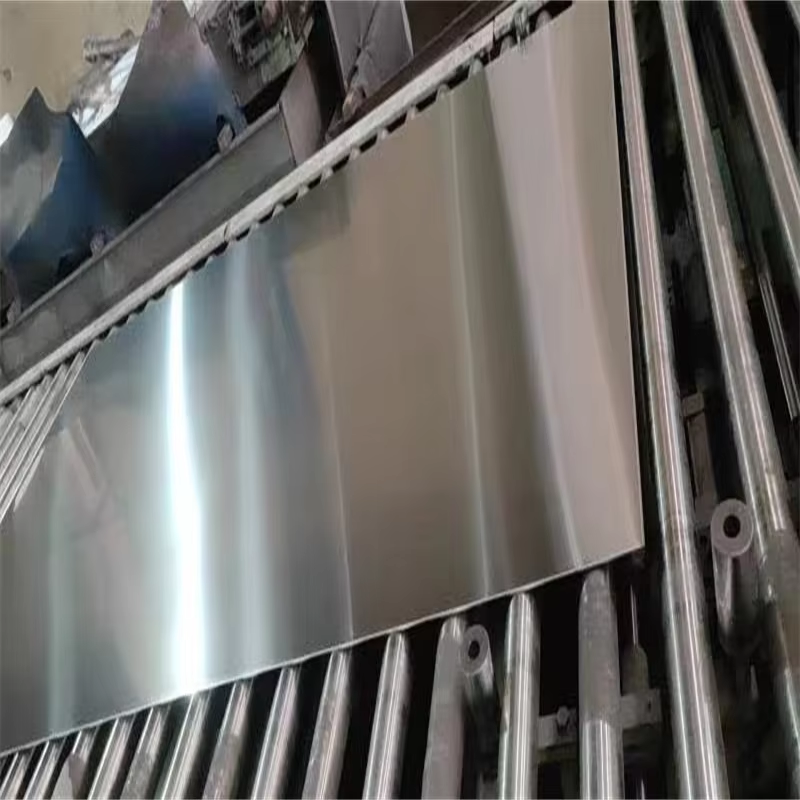
Hot rolled steel profiles form the structural backbone of modern industry. From the frame of a high-rise building to the support structure of a wind turbine, these versatile shapes are everywhere in our built environment. Understanding where and how to use each profile type can mean the difference between a cost-effective project and one plagued by over-engineering or, worse, structural failure. This article examines the practical applications of the five most common hot rolled steel profiles — angles, channels, beams, tees, and Z-sections — and explains how material grades Q235B and Q345B influence profile selection in real-world projects.
What Are Hot Rolled Steel Profiles?
Hot rolled steel profiles are long steel products that have been processed at high temperatures (above 1,700°F / 927°C) and then passed through a series of rollers to achieve a specific cross-sectional shape. The hot rolling process refines the grain structure of the steel, giving the finished profile consistent mechanical properties along its length. Unlike cold-formed sections, hot rolled profiles have radii at the corners and a scale (oxide) surface that is typically removed before painting or galvanizing. The most widely used profiles in industrial procurement are angles (equal and unequal leg), channels (C-shaped and U-shaped), H-beams and I-beams, T-sections, and Z-sections. Each shape is engineered to resist specific types of stress: beams resist bending, angles resist tension and compression in truss systems, channels provide lateral stability, and Z-sections excel in continuous spanning applications such as purlins.
Construction and Building Structures
In building construction, hot rolled steel profiles serve as columns, beams, and bracing elements. H-beams (also called wide-flange beams) are the primary choice for column applications because their wider flange provides greater resistance to buckling. In many mid-rise commercial buildings, a typical frame might use H-beam columns spaced at 6 to 8 meters with I-beams spanning between them to support floor slabs. Angles are extensively used in roof trusses and as bracing members in steel frames. In seismic zones, the ductility of hot rolled profiles makes them preferable to cold-formed alternatives; the hot rolling process produces a tougher material that can absorb energy during an earthquake. For building frameworks in China and Southeast Asia, Q235B is the most common grade specification because it offers adequate yield strength (235 MPa) for the majority of non-high-rise structures while keeping material costs manageable. When a building exceeds 15 stories or must support exceptionally heavy floor loads, Q345B (yield strength 345 MPa) is specified to reduce the required section size and lower the dead load on the foundation.
Infrastructure and Civil Engineering
Infrastructure projects demand profiles that can withstand decades of environmental exposure and cyclic loading. Hot rolled steel profiles are used in bridge construction, tunnel supports, and sound barrier frameworks along highways. In bridge engineering, H-beams and I-beams form the primary girder system. The deeper the beam, the greater its load-carrying capacity for a given span. For shorter spans (under 20 meters), rolled beams are often sufficient without the need for built-up plate girders. Channels are frequently used as edge beams along bridge decks and as framing members for maintenance walkways. In tunnel construction, steel arches made from hot rolled channels or H-beams are installed as primary support before shotcrete is applied. These temporary support systems must be capable of bearing the full weight of the overlying soil or rock. Z-sections and angled bracing are also used in the formwork systems for concrete bridges, where they provide the necessary rigidity to hold wet concrete in place until it cures.
Industrial Machinery and Equipment Frames
Heavy machinery requires robust frame structures that can support operating equipment while dampening vibration. Hot rolled profiles are the default choice for machine bases, crane runways, and industrial frames. In manufacturing plants, channel sections are commonly used as track beams for overhead cranes. The C-shape of the channel provides a natural seating surface for crane wheels and allows easy access for maintenance. H-beams are used as column supports for multi-story industrial mezzanines, where each level may carry concentrated point loads from stored materials or production equipment. T-sections (tee profiles) are often used as stiffeners in machine frames and as flange connections in bolted structural assemblies. One important consideration in machinery applications is the fatigue performance of the steel. Q345B is generally preferred over Q235B for dynamic loading conditions because its higher strength allows for lighter sections that produce lower inertia forces under cyclic loading. However, the welding procedure must be carefully controlled for Q345B to avoid hydrogen-induced cracking in the heat-affected zone.
Transmission Towers and Power Infrastructure
Electrical transmission towers represent one of the most demanding applications for hot rolled steel profiles. These lattice structures must resist wind loads, ice loads, and the tension of the conductor cables themselves. Angles are the dominant profile type in transmission tower construction. Equal-leg angles are used as primary leg members and bracing elements throughout the tower. The angle profile is ideal for this application because it can be bolted directly at both legs, providing a strong connection using simple lap joints. In a typical 132 kV transmission tower, angles in sizes ranging from 50x50x5 mm to 200x200x20 mm may be used depending on the position in the tower. Unequal-leg angles are sometimes used in cross-arm assemblies where one flange needs to be wider to accommodate insulator attachments. Channels are used sparingly in transmission structures, primarily as base plates or as members in substation support structures. The galvanizing process is critical for transmission applications because towers are exposed to the atmosphere for 30 to 50 years. Q235B is the standard grade for transmission tower angles in most markets because its chemistry is well-suited to the hot-dip galvanizing process, producing a consistent zinc coating adhesion.
Warehouse Racking and Storage Systems
Modern logistics depends on high-density racking systems that maximize vertical storage capacity. Hot rolled steel profiles are the primary structural elements in pallet racking, push-back racks, and drive-in racking systems. Upright frames in pallet racking are typically made from cold-formed steel in lighter applications, but for heavy-duty systems (loads exceeding 3,000 kg per beam level), hot rolled channels or H-beams are used as uprights. The hot rolled sections provide the necessary deformation resistance if a forklift accidentally impacts the rack. Beams in racking systems are often hot rolled I-beams or specialized roll-formed sections that incorporate a step for beam connectors. Z-sections are widely used as horizontal braces that tie the racking rows together and as shelf supports in long-span shelving systems. The continuous spanning capability of Z-sections makes them more material-efficient than channels for these applications. Q235B is the typical grade for racking systems because the yield strength is sufficient for the deflection limits that govern rack design, and the material is readily available in the profile sizes most commonly used in racking (such as 100x50x5 mm channels and 150x75x6.5 mm channels).
Material Grade Selection: Q235B vs Q345B
Selecting the correct material grade is as important as selecting the right profile shape. Q235B is a carbon structural steel with a minimum yield strength of 235 MPa and a tensile strength range of 370–500 MPa. The 'B' designation indicates the material has passed impact testing at room temperature (20°C), which makes it suitable for most ambient-temperature structural applications. Q235B is readily weldable using conventional methods and is the default choice for general construction, racking, and non-critical machinery frameworks. Q345B is a low-alloy high-strength structural steel with a minimum yield strength of 345 MPa. It is approximately 30% stronger than Q235B in yield, which allows for lighter sections and reduced total steel weight in a structure. However, Q345B requires more controlled welding procedures, particularly for thicker sections. In practice, many procurement teams specify Q235B for bolted structures and Q345B for welded structures where weight savings justify the additional material and welding cost. Both grades are stocked in depth by steel service centers in Tianjin, Hebei, and Shandong, which means lead times are typically shorter than for specialty grades.