
 EN
EN
 AR
AR
 HR
HR
 CS
CS
 DA
DA
 NL
NL
 FI
FI
 FR
FR
 DE
DE
 EL
EL
 IT
IT
 JA
JA
 KO
KO
 NO
NO
 PL
PL
 PT
PT
 RU
RU
 ES
ES
 TL
TL
 ID
ID
 SR
SR
 SK
SK
 UK
UK
 VI
VI
 SQ
SQ
 HU
HU
 MT
MT
 TH
TH
 TR
TR
 FA
FA
 MS
MS
 MK
MK
 HY
HY
 AZ
AZ
 KM
KM
 LA
LA
 MN
MN
 MY
MY
 KK
KK
 UZ
UZ

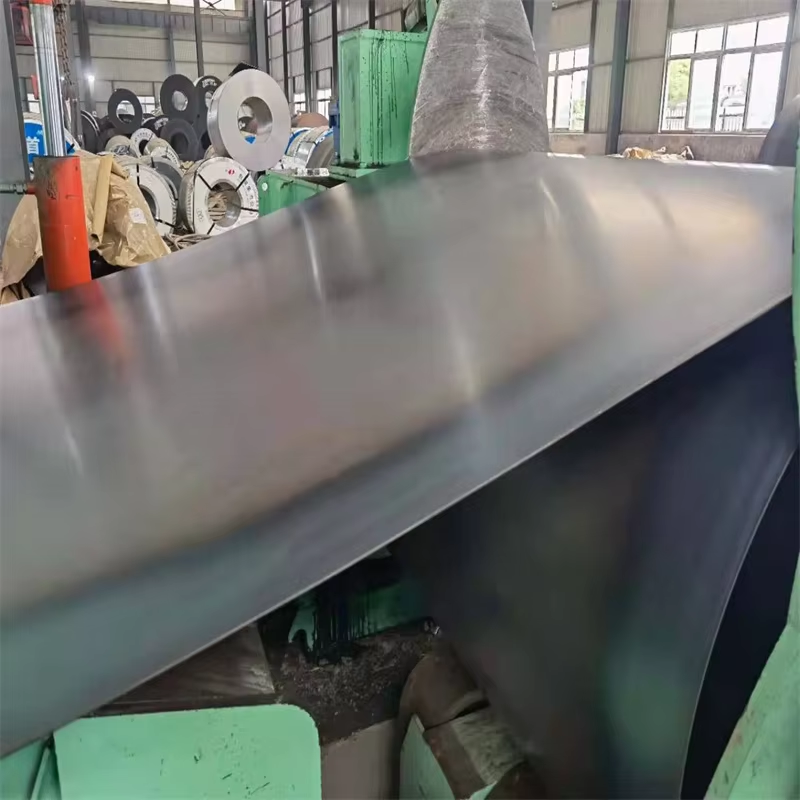
Hot rolled steel plate remains one of the most widely specified materials in structural engineering, heavy machinery fabrication, and large-scale infrastructure projects. Industrial procurement professionals evaluating hot rolled steel plate for their supply chains need to understand its unique combination of cost efficiency, mechanical reliability, and processing flexibility. A comprehensive evaluation of this material type, including its performance characteristics against cold rolled alternatives, helps purchasing managers make informed decisions that balance project specifications with budget constraints.
What Is Hot Rolled Steel Plate?
Hot rolled steel plate is manufactured by heating steel slabs above the recrystallization temperature, typically exceeding 1,700 degrees Fahrenheit or approximately 930 degrees Celsius. At this elevated temperature, the steel becomes malleable enough to pass through rolling mills that progressively reduce thickness to the target dimension. The resulting hot rolled steel plate develops a characteristic mill scale surface finish, which forms as the material cools naturally at ambient temperature after the rolling process. This manufacturing approach differs fundamentally from cold rolling, which processes steel at room temperature and produces tighter dimensional tolerances but at higher cost. The hot rolling process accommodates slab thicknesses from approximately 1.2 millimeters up to 200 millimeters and beyond, making it the method of choice when industrial applications demand heavy-gauge steel material.
Key Advantages of Hot Rolled Steel Plate
The cost-effectiveness of hot rolled steel plate is its most prominent advantage for large-volume procurement. Because the hot rolling process operates at lower energy cost per ton compared to the multi-pass cold reduction route, the resulting material carries a significantly lower price point. For construction contractors sourcing hundreds of tons for bridge girders or building frameworks, this cost differential directly impacts project margins. Beyond economics, hot rolled steel plate demonstrates excellent mechanical properties. Grades such as Q235B offer a minimum yield strength of 235 MPa, while Q345B provides 345 MPa, and international equivalents like ASTM A36 deliver 250 MPa minimum yield. These properties make hot rolled steel plate structurally reliable across a broad range of static and dynamic load applications. The material also exhibits strong weldability characteristics, with carbon equivalent values that permit standard welding procedures without requiring extensive preheat or post-weld heat treatment for most common grades. Fabrication shops regularly process hot rolled steel plate using shielded metal arc welding, gas metal arc welding, and submerged arc welding techniques without significant metallurgical complications.
Hot Rolled vs Cold Rolled Steel Plate: A Direct Comparison
Procurement professionals frequently weigh hot rolled steel plate against cold rolled alternatives. The choice depends on specific application requirements, tolerance expectations, and budget parameters. Hot rolled steel plate offers superior availability in thick gauges, with standard mill production covering the 3 mm to 150 mm range and special orders extending beyond 200 mm. Cold rolled plate, in contrast, is typically limited to thicknesses below 3 mm due to work hardening constraints during the reduction process. Formability is another comparative advantage for hot rolled steel plate, as the material retains its ductility from the high-temperature processing. When end users need deep drawing, bending, or forming operations, hot rolled material provides greater elongation percentages and reduced springback tendencies compared to work-hardened cold rolled sheet. The surface finish comparison favors cold rolled products for exposed applications requiring paint adhesion or cosmetic appeal. Hot rolled steel plate carries the dark mill scale surface, which is adequate for structural components that will be painted, galvanized, or embedded in concrete but is less suitable for consumer-facing visible surfaces without additional processing.
Comparison Table 1: Hot Rolled vs Cold Rolled Steel Plate
Hot Rolled vs Cold Rolled Steel Plate Comparison Dimensions: Hot Rolled typically 1.2 mm to 200+ mm; Cold Rolled typically 0.3 mm to 3.0 mm Surface Finish: Hot Rolled develops mill scale, rough texture; Cold Rolled produces smooth, bright surface finish Dimensional Tolerance: Hot Rolled standard tolerance is wider, typically plus or minus 0.2 to 1.5 mm; Cold Rolled achieves tight tolerance, typically plus or minus 0.05 to 0.15 mm Cost Structure: Hot Rolled lower cost per ton, suitable for structural volumes; Cold Rolled higher cost per ton, additional processing steps Mechanical Properties: Hot Rolled isotropic properties, uniform in all directions; Cold Rolled exhibits anisotropic properties from work hardening Weldability: Hot Rolled excellent for common grades, no cold-work effects; Cold Rolled requires attention to heat-affected zone softening Formability: Hot Rolled high elongation, good for bending and deep drawing; Cold Rolled reduced ductility but higher strength-to-weight ratio Typical Applications: Hot Rolled used for structural steel, pressure vessels, shipbuilding, heavy equipment; Cold Rolled used for automotive panels, appliances, furniture, precision components
Common Grades and Specifications for Hot Rolled Steel Plate
International buyers sourcing hot rolled steel plate encounter multiple grade designations that reflect different national standards. Chinese standard GB/T 700 defines Q235B as a general-purpose carbon structural steel with a minimum yield strength of 235 MPa and good weldability for structural applications. GB/T 1591 covers Q345B, a low-alloy high-strength structural steel offering 345 MPa minimum yield with improved tensile properties for demanding load-bearing designs. The Japanese Industrial Standard JIS G3101 specifies SS400, which is functionally equivalent to Q235B and widely accepted in Asian and Southeast Asian markets for general structures. ASTM International standard A36 defines one of the most common structural steels in North and South American markets, providing a minimum yield strength of 250 MPa and a tensile strength range of 400 to 550 MPa. Grade selection depends on the project governing standard, the structural engineer specification, and the importing country regulatory requirements. Tianjin Hengrunlong, located in the Tianjin Free Trade Zone with direct access to Tianjin Xingang port, supplies hot rolled steel plate in all these grade specifications from steel mills across Hebei, Liaoning, and Shandong provinces, serving clients across North America, South America, Europe, Oceania, and Southeast Asia.
Typical Industrial Applications of Hot Rolled Steel Plate
The versatility of hot rolled steel plate makes it indispensable across multiple industrial sectors. In civil engineering and construction, it serves as the primary material for bridge decking, column base plates, gusset plates, and stiffener elements in steel frame buildings. Heavy machinery manufacturers use thick-section hot rolled steel plate for excavator booms, crane structures, bulldozer frames, and mining equipment chassis where impact resistance and fatigue life are critical performance metrics. The shipbuilding industry consumes large quantities in hull plate, deck plate, and bulkhead fabrication, with classification societies such as Lloyd Register, DNV, and ABS specifying approved mill sources. Pressure vessel and boiler fabrication relies on certified hot rolled steel plate that meets API, ASME, or EN standards for elevated temperature service and cyclic pressure loading. Structural fabricators processing steel for stadium roofs, airport terminals, and industrial plant buildings depend on the consistent quality and ready availability of hot rolled steel plate from established supply chains.
Supply Chain Considerations for Hot Rolled Steel Plate Import
International procurement strategies for hot rolled steel plate require careful evaluation of mill source reliability, logistics infrastructure, and quality certification protocols. Buyers should verify that supplying mills hold ISO 9001 quality management certification and product-specific certifications such as mill test reports conforming to EN 10204 Type 3.1 or 3.2. Port proximity matters significantly for bulk steel shipments. Suppliers located near major export ports benefit from lower inland transportation costs and faster vessel loading cycles. Tianjin Xingang, one of the largest comprehensive ports in northern China, provides efficient breakbulk and containerized shipping options for hot rolled steel plate exports to global destinations. Material inspection procedures at the loading port should include dimensional verification, visual surface inspection for lamination defects, and review of heat number traceability against mill certificates. Third-party inspection agencies such as SGS, Bureau Veritas, or Intertek can provide independent quality assurance for international buyers who cannot attend loading inspections in person.
Table of Contents
- What Is Hot Rolled Steel Plate?
- Key Advantages of Hot Rolled Steel Plate
- Hot Rolled vs Cold Rolled Steel Plate: A Direct Comparison
- Comparison Table 1: Hot Rolled vs Cold Rolled Steel Plate
- Common Grades and Specifications for Hot Rolled Steel Plate
- Typical Industrial Applications of Hot Rolled Steel Plate
- Supply Chain Considerations for Hot Rolled Steel Plate Import