
 EN
EN
 AR
AR
 HR
HR
 CS
CS
 DA
DA
 NL
NL
 FI
FI
 FR
FR
 DE
DE
 EL
EL
 IT
IT
 JA
JA
 KO
KO
 NO
NO
 PL
PL
 PT
PT
 RU
RU
 ES
ES
 TL
TL
 ID
ID
 SR
SR
 SK
SK
 UK
UK
 VI
VI
 SQ
SQ
 HU
HU
 MT
MT
 TH
TH
 TR
TR
 FA
FA
 MS
MS
 MK
MK
 HY
HY
 AZ
AZ
 KM
KM
 LA
LA
 MN
MN
 MY
MY
 KK
KK
 UZ
UZ

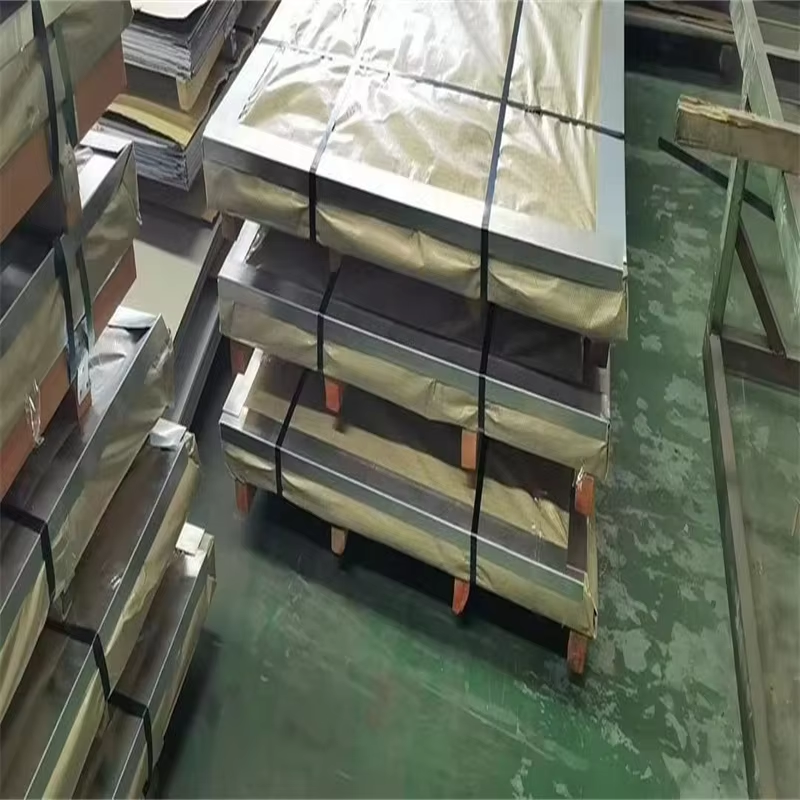
Hot rolled steel sheet for shipbuilding represents one of the most demanding steel product categories in terms of quality requirements, certification protocols, and performance expectations. Ship hulls, decks, bulkheads, and superstructures must withstand dynamic wave loads, corrosive marine environments, and extreme temperature variations while maintaining structural integrity over service lives spanning 25 to 30 years. The shipbuilding industry consumes millions of tons of hot rolled steel plate annually, with grades specified under classification society rules that govern every aspect from chemical composition to impact toughness at sub-zero temperatures. Understanding the full spectrum of shipbuilding steel grades, their certification pathways, and the quality verification processes involved is essential for procurement professionals serving shipyards, offshore engineering firms, and marine equipment manufacturers.
Shipbuilding Steel Classification: Understanding the Grade Designation System
The designation of hot rolled steel sheet for shipbuilding follows a structured system that communicates strength level and low-temperature toughness capability. Under the Chinese GB 712 standard, general strength hull structural steel grades are designated as A, B, D, and E, with the alphabetical order indicating progressively better low-temperature impact toughness. Grade A requires impact testing at 20°C (minimum 34J for longitudinal specimens), Grade B at 0°C, Grade D at -20°C, and Grade E at -40°C, all with minimum absorbed energy values that ensure the steel does not undergo brittle fracture in cold waters. High-strength hull structural steels follow the naming pattern AH32, DH32, EH32, FH32 (minimum yield strength 315 MPa) through AH36, DH36, EH36, FH36 (minimum yield strength 355 MPa) and up to AH40 through FH40 (minimum yield strength 390 MPa). The prefix letter follows the same temperature convention as the general strength grades. Internationally, ASTM A131 covers similar grades used in American shipbuilding practice, while classification societies including CCS (China Classification Society), ABS (American Bureau of Shipping), DNV (Det Norske Veritas), LR (Lloyd's Register), and BV (Bureau Veritas) each maintain their own material approval rules that generally align with IACS (International Association of Classification Societies) unified requirements.
Hull Construction: Primary Structural Applications
The hull forms the primary structure of any vessel and consumes the largest proportion of hot rolled steel sheet for shipbuilding. Hull plating consists of bottom shell plates, side shell plates, and bilge strakes that form the watertight envelope of the ship. Bottom shell plates experience the highest hydrostatic pressure and must resist buckling under combined compression from longitudinal bending and lateral water pressure. For large ocean-going vessels such as VLCCs (Very Large Crude Carriers) exceeding 300,000 DWT and container ships with capacities above 20,000 TEU, high-strength grades EH36 and EH40 in thicknesses from 15mm to 80mm are commonly specified for the bottom shell and strength deck regions where stress concentrations are highest. The longitudinal strength members including keel plates, deck stringers, and sheer strakes further demand grades with guaranteed through-thickness properties (Z-direction performance per GB/T 5313) to resist lamellar tearing at welded joints connecting these critical members. Shipyards typically order steel plates in lengths up to 12 meters and widths up to 4 meters, with controlled rolling and normalizing rolling processes specified to achieve the fine-grain microstructure essential for the required toughness levels.
Deck Plates: Load Distribution and Structural Integrity
Deck plates serve as both structural members resisting longitudinal bending stresses and as working surfaces bearing cargo loads, equipment weight, and wave impact on exposed decks. The strength deck, which is the uppermost continuous deck contributing to longitudinal hull girder strength, typically requires the same steel grade as the bottom shell for the midship region where bending moments are maximum. For weather decks exposed to green water loading, deck plates must combine strength with corrosion resistance, and specifications often include controlled sulfur content and inclusion shape control through calcium treatment to improve resistance to pitting corrosion. Cargo decks on bulk carriers require abrasion-resistant properties, and for vessels carrying corrosive cargoes such as coal or sulfur, shipowners may specify deck plates with slightly higher corrosion allowance or select grades produced through thermo-mechanical controlled processing (TMCP) that offer enhanced surface quality. Deck plate thickness typically ranges from 10mm to 40mm for main decks, with doubler plates and insert plates up to 60mm used at hatch corners and other stress concentration points where fatigue cracking risk demands additional material thickness.
Bulkheads: Compartmentalization and Damage Stability
Bulkheads divide the hull into watertight compartments essential for damage stability and also serve as transverse strength members that resist racking forces and support deck loads. Transverse watertight bulkheads in cargo ships are typically fabricated from Grade A or AH32 steel plate in thicknesses ranging from 8mm to 20mm, with thickness increasing toward the bottom where hydrostatic pressure is greater. Collision bulkheads, the foremost transverse bulkhead designed to survive a bow collision, are constructed to higher standards with Grade D or DH36 steel and are required by SOLAS (Safety of Life at Sea) regulations to be located within 5% to 8% of the ship's length from the forward perpendicular. For tankers carrying crude oil or chemical products, corrugated bulkheads formed from pressed steel plate provide weight efficiency while eliminating the need for stiffeners that would create crevices where cargo residues accumulate. The steel for corrugated bulkheads must demonstrate excellent formability to accept the deep pressing operation without cracking, with grades having controlled sulfur content below 0.010% and fine grain practice specified to ensure ductility during cold forming.
Superstructure and Accommodation Sections
The superstructure consists of deckhouses and accommodation blocks constructed above the strength deck. While these structures contribute less to overall hull girder strength, they must withstand wind loads, ship motion accelerations, and vibration from propulsion machinery. Hot rolled steel sheet for shipbuilding used in superstructure applications is typically lighter gauge, ranging from 6mm to 15mm thickness, with Grade A or AH32 being the most common specifications. For accommodation decks and bulkheads, fire protection requirements under SOLAS Chapter II-2 drive material specification toward grades with documented high-temperature mechanical properties, and A-60 fire-rated divisions use steel plate combined with mineral wool insulation systems rather than relying solely on steel thickness. Vibration fatigue is a particular concern for superstructure connections to the main hull, and classification societies require detailed finite element analysis of these interfaces with fatigue assessment based on S-N curve methodology. Steel plates in these transition zones may require additional ultrasonic testing and tighter flatness tolerances to ensure fit-up quality for the complex welded connections.
Classification Society Certification: The Regulatory Framework
All hot rolled steel sheet for shipbuilding must be certified by a recognized classification society before acceptance by shipyards. The certification process begins with the steel mill obtaining approval of its manufacturing process from the classification society, an audit that evaluates the complete production chain from steelmaking (including secondary refining and continuous casting) through rolling, heat treatment, and testing procedures. Once mill approval is granted, each production lot of shipbuilding steel undergoes witness testing by a classification society surveyor who verifies chemical composition, tensile properties, impact toughness, and for certain grades, through-thickness tensile testing and ultrasonic examination. The surveyor stamps each plate with the society's mark and the grade designation, creating traceability from finished plate back to the original heat number and slab identity. For steel exported from China, dual certification is common practice where plates are certified simultaneously by CCS and one or more international societies such as ABS, DNV, or LR, enabling the same material to be accepted by shipyards operating under different flag state requirements. The IACS Unified Requirements W11 for normal and higher strength hull structural steels provide the baseline technical criteria that individual classification societies incorporate into their rules, ensuring a high degree of global consistency in shipbuilding steel quality.
International Standard Cross-Reference and Grade Selection
Navigating the various national and international standards for hot rolled steel sheet for shipbuilding requires understanding the equivalencies and subtle differences between specification systems. The table below provides a practical cross-reference for the most commonly procured shipbuilding steel grades across GB 712, ASTM A131, and IACS UR W11 designations. When selecting grades, procurement professionals must consider the ship's operating environment, specifically the minimum design temperature which determines whether Grade A (suitable for temperate waters only), Grade D/E (required for North Atlantic winter service), or FH-grade steels (for Arctic and ice-class vessels) are necessary. Additional considerations include plate thickness which affects impact test requirements, with thicker plates requiring testing at lower temperatures because of the greater constraint against plastic deformation at crack tips. For ice-strengthened vessels operating in polar waters, IACS Polar Class rules PC1 through PC7 specify steel grades for ice belts and bow regions with enhanced low-temperature toughness beyond standard FH36 and FH40, often requiring grades with guaranteed Charpy V-notch energy absorption of 60J or more at -60°C.
Quality Control and Inspection Requirements
Shipbuilding steel plate quality verification follows a rigorous multi-stage protocol that extends beyond standard mill certification. Plates for critical structural locations undergo 100% ultrasonic testing per classification society rules, typically using a grid scanning pattern that inspects the entire plate area for laminations and internal discontinuities. Surface quality inspection identifies and addresses surface defects including scabs, seams, laps, and excessive scale that could interfere with welding or coating adhesion. Dimensional inspection verifies thickness within the minus 0.3mm tolerance band specified by most classification society rules, along with flatness requirements typically 3mm per meter for plates up to 25mm thickness and 2mm per meter for thicker plates. Edge preparation including beveling and edge planing for plates destined for butt-welded seams must meet specified root face and bevel angle tolerances. For plates used in critical structural details identified by the ship's finite element analysis, additional testing may include through-thickness tensile testing to verify Z35 quality (minimum 35% reduction of area in the through-thickness direction) and CTOD (Crack Tip Opening Displacement) testing to confirm fracture toughness in the heat-affected zone of welded joints. Third-party inspection agencies such as SGS, Bureau Veritas Inspection, or Intertek frequently supplement classification society oversight, particularly for export shipments where the buyer's country may require independent verification.
Table of Contents
- Shipbuilding Steel Classification: Understanding the Grade Designation System
- Hull Construction: Primary Structural Applications
- Deck Plates: Load Distribution and Structural Integrity
- Bulkheads: Compartmentalization and Damage Stability
- Superstructure and Accommodation Sections
- Classification Society Certification: The Regulatory Framework
- International Standard Cross-Reference and Grade Selection
- Quality Control and Inspection Requirements