
 EN
EN
 AR
AR
 HR
HR
 CS
CS
 DA
DA
 NL
NL
 FI
FI
 FR
FR
 DE
DE
 EL
EL
 IT
IT
 JA
JA
 KO
KO
 NO
NO
 PL
PL
 PT
PT
 RU
RU
 ES
ES
 TL
TL
 ID
ID
 SR
SR
 SK
SK
 UK
UK
 VI
VI
 SQ
SQ
 HU
HU
 MT
MT
 TH
TH
 TR
TR
 FA
FA
 MS
MS
 MK
MK
 HY
HY
 AZ
AZ
 KM
KM
 LA
LA
 MN
MN
 MY
MY
 KK
KK
 UZ
UZ

Why Hot Rolled Steel Remains the Construction Industry Backbone
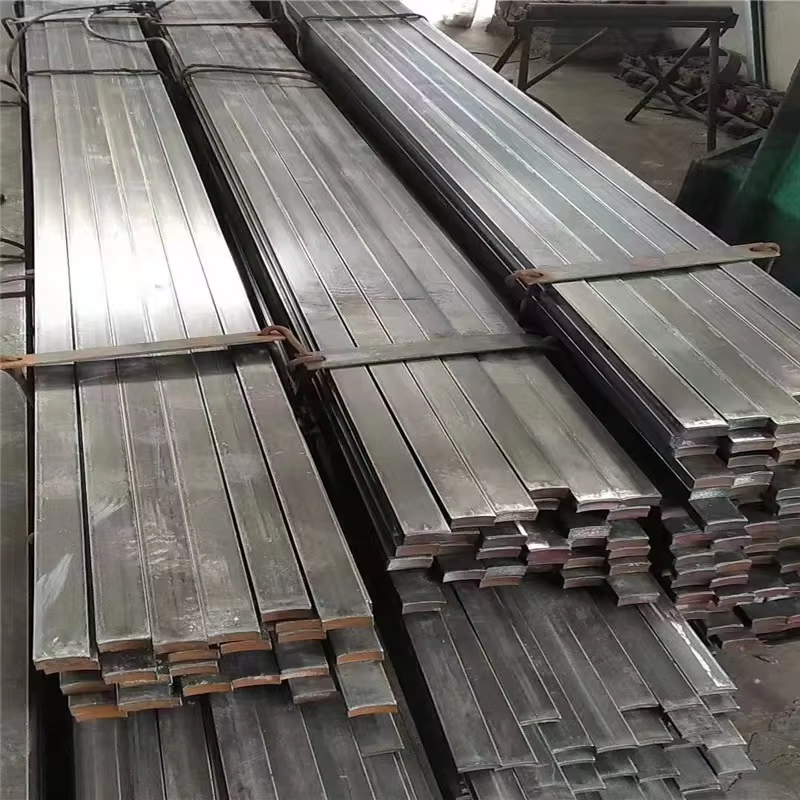
Hot rolled steel for construction has been a fundamental material choice for buildings, bridges, and industrial infrastructure for over a century, and its dominance continues because no alternative material matches its combination of availability, structural reliability, and cost predictability at scale. The hot rolling process involves heating steel billets or slabs to temperatures between 1,100 and 1,300 degrees Celsius and passing them through a series of rollers that progressively reduce the cross-section to the desired shape and thickness. Unlike cold rolling, which is typically reserved for thin gauges and precision applications, hot rolling can produce the heavy sections—wide flange beams, thick plates, angles, channels, and reinforcing bars—that form the primary structural skeleton of buildings and civil works. Construction professionals specifying hot rolled steel for construction benefit from a globally standardized product with well-characterized mechanical properties, extensive design code coverage in standards such as Eurocode 3, AISC 360, and GB 50017, and a mature supply chain that delivers material economically from mill to site across continents. For procurement managers, structural engineers, and general contractors, understanding the specific advantages of hot rolled steel over alternative structural materials—and over cold rolled steel within the steel family—is essential for making informed material decisions that balance structural performance, construction schedule, and project budget.
Cost-Effectiveness and Material Availability at Scale
The cost advantage of hot rolled steel for construction begins with the economies of scale inherent in modern steel mill operations. Integrated steel mills producing hot rolled coil and sections operate at annual capacities measured in millions of metric tons, with the largest facilities exceeding 10 million metric tons per year. This production scale drives per-unit costs down and creates a deep, liquid market where standard structural grades—Q235B, Q345B, S355JR, ASTM A36, ASTM A572 Grade 50—are available from multiple sources in virtually any quantity a construction project requires. For a typical mid-rise commercial building, structural steel frame cost represents approximately 10 to 15 percent of the total project budget, and the material cost component of that frame is further reduced by the fact that hot rolled sections arrive at the fabrication shop in near-net shapes, minimizing the machining, welding, and cutting operations needed before erection. Compared with reinforced concrete, steel frame construction generally offers faster erection cycles—steel columns and beams can be erected at rates of 300 to 500 square meters of floor area per day with a properly sized crew—reducing general conditions costs, crane rental duration, and the financial carrying cost of construction loans. The ability to order hot rolled steel in mill-standard lengths with predictable lead times of two to six weeks for common sections removes material procurement from the project's critical path for most building types.
Structural Reliability and Predictable Mechanical Properties
Hot rolled steel for construction offers design engineers a material with mechanical properties that are extensively documented, statistically validated, and governed by international standards with rigorous quality assurance requirements. When a structural engineer designs a beam using Q345B steel, the design code allows a nominal yield strength of 345 MPa for thicknesses up to 16 mm, with statistically derived resistance factors that account for the variability observed across millions of production heats. This reliability is not theoretical: every heat of structural steel produced by a mill operating under ISO 9001 quality management receives a mill test certificate documenting the actual chemical composition and mechanical test results. For critical structural members, supplementary Charpy V-notch impact testing at specified temperatures verifies the material's resistance to brittle fracture throughout the structure's design life. The predictability of hot rolled steel properties also extends to fire engineering: structural steel's reduction in yield strength and elastic modulus at elevated temperatures is well characterized in design standards, allowing engineers to specify fire protection systems—intumescent coatings, board systems, or spray-applied fire resistive materials—with calculated fire resistance ratings up to 120 minutes or more for primary structural frames in high-rise buildings.
Design Flexibility for Diverse Structural Systems
Hot rolled steel for construction accommodates a wide range of structural systems, from simple braced frames and portal frames in low-rise industrial buildings to complex moment-resisting frames, diagrids, and tubular systems in high-rise and long-span structures. The availability of hot rolled sections in standardized series—wide flange (W/HW), standard (I/HN), channels (C/U), angles (L), and hollow structural sections—allows engineers to optimize each member for its specific load path. A composite floor system combining hot rolled steel beams with cast-in-place or precast concrete slabs achieves longer spans with shallower structural depth than either material alone, a principle exploited in commercial office buildings where maximizing floor-to-ceiling height and column-free floor plates adds rental value. At the other end of the structural spectrum, hot rolled steel plates in thicknesses of 12 mm to 100 mm and widths up to 4,500 mm enable the fabrication of built-up plate girders, box columns, and heavy truss members for bridge and stadium applications where standard rolled sections would be undersized. This flexibility to transition from standardized sections for repetitive building frames to custom-fabricated members for signature architectural elements—all using the same base material and design code framework—is a unique advantage of steel as a structural material.
Weldability, Connection Simplicity, and Erection Efficiency
The carbon content and alloy balance of structural hot rolled steel grades are deliberately engineered to provide good weldability without requiring preheating for most common thicknesses and joint configurations. Q235B and Q345B grades, with carbon equivalent values typically below 0.40%, can be welded using common processes such as shielded metal arc welding, gas metal arc welding, and flux-cored arc welding with standard filler metals. This weldability translates into construction site efficiency because connections—whether shop-welded and field-bolted, or fully field-welded—can be executed by qualified welders using well-established procedures without the specialized preheat, interpass temperature control, and post-weld heat treatment that higher-carbon or alloy steels often demand. Bolted connections using high-strength bolts take advantage of the flat, parallel surfaces of hot rolled flange sections, which accept bolt bearing without the tapered washers sometimes needed on older rolled shapes. For moment connections, end plates can be shop-welded to beam ends and field-bolted to column flanges, an approach that minimizes the amount of overhead and vertical field welding—historically the most quality-sensitive operations in steel erection—and transfers quality control to the controlled shop environment where automatic welding equipment produces consistent, inspectable welds.
A Construction Project Scenario: Steel Frame Industrial Facility
Consider the structural procurement for a 15,000-square-meter logistics warehouse with a clear internal height of 12 meters, column grid of 8 by 24 meters, and overhead crane runway loads of 20 metric tons. The structural engineer specifies hot rolled steel for construction in the following configuration: Q345B wide flange columns (HW350x350), roof trusses fabricated from Q345B angles and channels with gusset plate connections, crane runway beams in HN600x200 sections, and roof purlins in cold-formed Z-sections attached to the truss top chords. During the bid phase, the steel fabricator evaluates material suppliers on total delivered cost including inland transportation from mill to fabrication shop, mill test certificate completeness, and the supplier's track record for on-schedule delivery of mixed-section orders. A Tianjin-based supplier with access to multiple mill sources can consolidate columns, beams, angles, channels, and plate into coordinated shipments, reducing the number of truck deliveries and simplifying receiving inspection at the fabrication facility. Tianjin Hengrunlong Import and Export Co., Ltd., whose product range spans hot rolled coils, H-beams, steel pipes, stainless steel, aluminum, and related hardware accessories, illustrates the integrated supply model that construction contractors value for projects requiring multiple steel product categories from a single procurement channel serving markets in North America, South America, Europe, Oceania, and Southeast Asia.
Sustainability and Lifecycle Considerations
Hot rolled steel for construction contributes to sustainable building practices through several inherent characteristics. Structural steel is the most recycled material globally by weight, with an estimated recovery rate exceeding 90 percent from demolition projects and an electric arc furnace recycling route that produces new steel with approximately 70 percent less energy than primary steelmaking from iron ore. The high recycled content of structural steel—often 80 to 95 percent for EAF-produced sections—contributes to LEED Materials and Resources credits and BREEAM Mat 01 points. At end of life, bolted steel connections enable deconstruction rather than demolition, allowing structural members to be directly reused in new construction or efficiently separated for scrap recycling. From a lifecycle cost perspective, steel structures are adaptable: floor plates can be reconfigured by relocating non-load-bearing partitions, and future vertical expansion can be accommodated by designing column splices and foundations for additional stories at the initial construction phase. This adaptability extends the economic life of steel-framed buildings well beyond their original program, reducing the embodied carbon per year of service.
Questions About Hot Rolled Steel in Construction
Q: What are the main differences between hot rolled and cold rolled steel for construction purposes?
A: For construction applications, the key difference is that hot rolled steel is produced at temperatures above the recrystallization point of steel, which allows the production of thick, heavy sections—beams, columns, thick plates, and angles—that cold rolling cannot economically produce. Hot rolled sections have a characteristic mill scale surface and slightly looser dimensional tolerances compared to cold rolled steel, but these are acceptable for structural applications where members will be encased in concrete, covered by finishes, or protected by intumescent coatings. Cold rolled steel in construction is limited to thin gauge applications such as metal decking, light-gauge steel stud framing, and purlins, typically in thicknesses under 6 mm. Hot rolled steel provides the primary load-bearing skeleton; cold formed steel provides secondary and infill elements.
Q: How do I verify that hot rolled steel delivered to my site meets the specified grade?
A: Verification follows a three-step process. First, check that the heat numbers stamped or tagged on each delivered section match the heat numbers on the accompanying mill test certificate. Second, review the MTC for compliance with the specified grade's chemical composition limits and mechanical property minimum values. Third, for critical members or when there is cause for doubt, perform supplementary verification testing: a portable optical emission spectrometer can confirm chemical composition non-destructively on site, and if necessary, cut sample coupons for tensile and impact testing at an accredited laboratory. Material that fails to match its MTC should be quarantined, reported to the supplier, and not incorporated into the structure until the discrepancy is resolved.
Q: Can hot rolled steel be used in seismic zones, and what special requirements apply?
A: Yes, hot rolled steel is extensively used in seismic zones worldwide, but specific material and detailing requirements apply. Structural steel for seismic force-resisting systems should meet the material toughness requirements specified in the governing seismic design code, which may require Charpy V-notch testing at specific temperatures. For example, AISC 341 requires notch toughness testing for members in special moment frames and special concentrically braced frames, with the test temperature tied to the lowest anticipated service temperature. Beyond material properties, seismic design relies on specific connection detailing—such as reduced beam section connections in moment frames—that force plastic hinging away from the welded beam-to-column joint, preserving connection integrity through multiple inelastic deformation cycles during a design-level earthquake.
Table of Contents
- Why Hot Rolled Steel Remains the Construction Industry Backbone
- Cost-Effectiveness and Material Availability at Scale
- Structural Reliability and Predictable Mechanical Properties
- Design Flexibility for Diverse Structural Systems
- Weldability, Connection Simplicity, and Erection Efficiency
- A Construction Project Scenario: Steel Frame Industrial Facility
- Sustainability and Lifecycle Considerations
- Questions About Hot Rolled Steel in Construction