
 EN
EN
 AR
AR
 HR
HR
 CS
CS
 DA
DA
 NL
NL
 FI
FI
 FR
FR
 DE
DE
 EL
EL
 IT
IT
 JA
JA
 KO
KO
 NO
NO
 PL
PL
 PT
PT
 RU
RU
 ES
ES
 TL
TL
 ID
ID
 SR
SR
 SK
SK
 UK
UK
 VI
VI
 SQ
SQ
 HU
HU
 MT
MT
 TH
TH
 TR
TR
 FA
FA
 MS
MS
 MK
MK
 HY
HY
 AZ
AZ
 KM
KM
 LA
LA
 MN
MN
 MY
MY
 KK
KK
 UZ
UZ

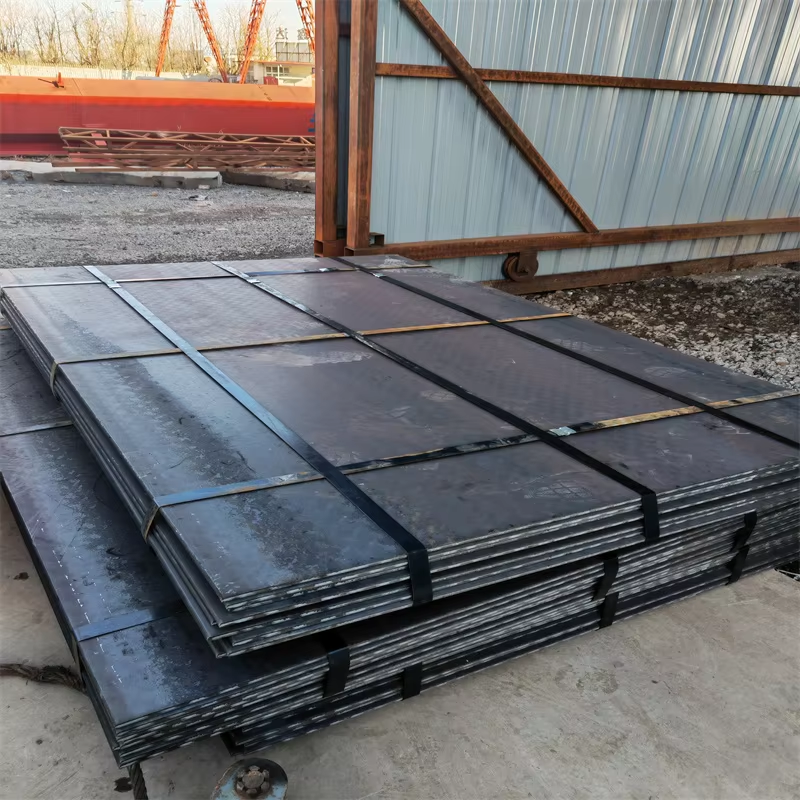
Hot Rolled Steel as the Preferred Material for Modern Bridge Engineering
Hot rolled steel for bridge construction has been the dominant material choice for medium and long-span bridges since the late nineteenth century, and its role has expanded rather than diminished with advances in structural engineering and materials science. The fundamental reasons are rooted in steel's mechanical properties: a high strength-to-weight ratio that enables longer spans with shallower structural depth than reinforced or prestressed concrete alternatives, excellent ductility that provides warning before failure through visible deformation, and predictable fatigue behavior that allows engineers to design for specific service life requirements under cyclic traffic loading. Bridge engineers specifying hot rolled steel for bridge construction today work with purpose-developed grades such as Q345qD, Q370qD, and Q420qD under Chinese standard GB/T 714, or ASTM A709 grades 36, 50, and 50W under the American bridge specification. These materials combine the general structural properties of building-grade steels with additional requirements for notch toughness at low service temperatures, through-thickness tensile properties for highly restrained welded joints, and in the case of weathering grades, atmospheric corrosion resistance that can eliminate the need for applied paint systems over the bridge's service life in suitable environments. Whether the bridge type is a simple plate girder crossing, a continuous truss, a steel arch, or a cable-stayed structure with an orthotropic steel deck, hot rolled steel plate and sections provide the material platform from which these diverse structural forms are fabricated.
Material Grades and Toughness Requirements for Bridge Steel
Bridge-specific steel grades differ from general structural grades primarily in their toughness requirements, which are essential for preventing brittle fracture at the low service temperatures that bridges experience in winter and in resisting the propagation of fatigue cracks that initiate at stress concentrations near welds, bolt holes, and geometric discontinuities. Under GB/T 714, the Chinese standard for structural steel for bridges, Q345qD must demonstrate Charpy V-notch impact energy of at least 34 J at -20 degrees Celsius in the longitudinal direction, while Q370qD and Q420qD maintain the same toughness requirement at higher yield strength levels. The 'D' suffix indicates the low-temperature toughness qualification, distinguishing these grades from their general structural counterparts (Q345B, Q345C) that may not meet bridge service requirements. For bridges in extremely cold regions, Q345qE grades with impact testing at -40 degrees Celsius are available. On the international side, ASTM A709 Grade 50W provides a yield strength of 345 MPa with similar toughness specifications and the added benefit of weathering characteristics (the 'W' designation) that allow the steel to form a protective patina, reducing or eliminating painting requirements. Procurement teams sourcing hot rolled steel for bridge construction must verify that mill test certificates include the specific bridge-grade designations and impact test results, as substitution with general structural grades that happen to meet the same tensile properties is not acceptable under bridge design codes.
Weathering Steel and Lifecycle Corrosion Management
One of the most significant developments in hot rolled steel for bridge construction has been the widespread adoption of weathering steel grades, which form a dense, adherent oxide layer when exposed to alternating wet and dry atmospheric cycles. This patina, which typically develops over 18 to 36 months to a stable dark brown or purple-brown color, acts as a barrier that progressively slows the corrosion rate to approximately 0.025 mm per century under favorable environmental conditions. In the United States, ASTM A709 Grade 50W (and historically ASTM A588) has been used for thousands of highway bridges, particularly in locations where the bridge is not subject to prolonged wetness from water spray, deicing salt mist, or continuous high humidity above 80 percent. In China, Q355NH and similar weathering grades serve the same function, with growing adoption in highway and railway bridge applications. The lifecycle cost advantage of unpainted weathering steel is significant: eliminating initial painting and periodic recoating over a 100-year design life can reduce maintenance costs by 30 to 50 percent compared to conventionally painted steel bridges, according to industry studies by bodies such as the American Iron and Steel Institute. However, detailing is critical: weathering steel bridges require design details that avoid water and debris traps—open drainage, sealed box interiors where necessary, and avoidance of horizontal surfaces that pond water—since the protective patina will not form where the steel remains continuously wet.
Fabrication and Erection Advantages in Bridge Construction
Hot rolled steel for bridge construction offers significant advantages in fabrication and erection logistics that directly affect project schedules and construction costs. Steel bridge girders, whether plate girders fabricated from hot rolled steel plate or rolled beam bridges using heavy wide flange sections, can be shop-assembled into transportable segments weighing 40 to 80 metric tons and delivered to site by truck or barge. This shop fabrication approach concentrates the most quality-critical operations—full-penetration butt welding of flange and web splices, stud welding for composite deck shear connectors, and dimensional control of camber and sweep—in a controlled factory environment with automated welding equipment and systematic nondestructive testing. On site, steel bridge erection is rapid: a typical two-span highway bridge with steel plate girders can be erected in one to two weeks using mobile cranes, compared with several months for cast-in-place concrete construction requiring formwork, curing cycles, and temporary support falsework. For bridges crossing active roadways, railways, or waterways, this accelerated erection schedule minimizes traffic disruption, reduces temporary works cost, and shortens the overall project duration. The ability to preassemble steel segments off the critical path and erect them in planned closure sequences is a defining advantage of steel bridge construction that is difficult to replicate with site-cast concrete alternatives.
A Bridge Construction Scenario: Highway Overpass Plate Girder Bridge
Consider the procurement and fabrication for a two-span continuous highway overpass with span lengths of 35 meters each, total bridge width of 12 meters, and four welded plate girders as the primary longitudinal members. The bridge engineer specifies Q345qD hot rolled steel plate for the girder webs and flanges in thicknesses ranging from 16 mm to 40 mm, with the plate material sourced in widths up to 3,500 mm to minimize longitudinal web splices. The specification requires 100 percent ultrasonic testing of all full-penetration butt welds, Charpy V-notch testing from each plate used in tension flange applications, and dimensional inspection of camber to within plus/minus 5 mm of the design profile. During the tender phase, the steel fabricator evaluates hot rolled steel suppliers for bridge construction based on their ability to provide Q345qD plate with the required Charpy values from a mill with GB/T 714 production qualification, consistent plate flatness to minimize fit-up time during girder assembly, and delivery phasing that matches the fabricator's production schedule for the four girders. A supplier with integrated logistics through Tianjin port—a major gateway for steel exports from northern China—can coordinate containerized and breakbulk shipments that combine plate material with complementary products such as structural sections for cross-frames and stiffeners. Tianjin Hengrunlong Import and Export Co., Ltd., with its diverse product lines including carbon steel plates and coils, H-beams, and stainless steel, offers the type of multi-product procurement capability that bridge fabricators and contractors find practical for projects requiring coordinated material supply across steel product categories.
Design Flexibility Across Bridge Types
Hot rolled steel for bridge construction supports a remarkably diverse range of structural types, each exploiting different aspects of steel's mechanical and fabrication characteristics. In plate girder bridges—the most common type for highway spans between 20 and 100 meters—hot rolled steel plate is cut, welded, and stiffened to create I-shaped girders that can be optimized for the specific bending moment and shear force envelopes of each span, with flange thickness increased near piers where negative moments are highest and reduced at midspan where positive moments govern. Truss bridges, economical for spans of 60 to 300 meters, use hot rolled steel angles, channels, and wide flange sections for chord and web members, with the open lattice structure minimizing wind load and providing inherent redundancy—the failure of a single diagonal member does not necessarily cause collapse. For the longest spans—cable-stayed bridges from 200 to over 1,000 meters and suspension bridges beyond that—hot rolled steel plate forms the orthotropic deck, a stiffened plate system that serves simultaneously as the traffic-carrying surface, the longitudinal girder, and the lateral wind-resisting element, a structural efficiency that cannot be matched by concrete deck alternatives at these span scales. The common thread across all these bridge types is the engineer's ability to tailor the steel solution—through plate thickness selection, stiffener configuration, and welding sequence—to the specific demands of the site, span, and loading conditions.
Fatigue Design and Long-Term Structural Integrity
Fatigue resistance is a fundamental design consideration for hot rolled steel for bridge construction because bridges experience millions of stress cycles from traffic loading over their design lives. Steel's fatigue behavior follows well-established S-N curves (stress range versus number of cycles to failure) that are codified in AASHTO, Eurocode 3, and GB 50017 for different connection detail categories. The most fatigue-critical details in steel bridges are welded attachments—transverse stiffener welds, cover plate terminations, and gusset plate connections—where stress concentrations at the weld toe can initiate cracks under repeated loading. Modern bridge design mitigates fatigue risk through detail selection: choosing continuous fillet welds around stiffener corners rather than intermittent welds, specifying complete joint penetration groove welds with ground flush profiles at flange butt splices, and avoiding attachments in tension flange regions wherever possible. For existing bridges, fatigue life can be extended through retrofit techniques such as ultrasonic impact treatment, which introduces compressive residual stress at weld toes to inhibit crack initiation, or by drilling crack-arrest holes at detected crack tips. The well-characterized fatigue behavior of steel—developed through over a century of bridge service experience and laboratory testing—gives bridge engineers the confidence to design for specified service lives of 100 to 120 years, with inspection and maintenance programs focused on the known critical details rather than generalized surveillance of the entire structure.
Table of Contents
- Hot Rolled Steel as the Preferred Material for Modern Bridge Engineering
- Material Grades and Toughness Requirements for Bridge Steel
- Weathering Steel and Lifecycle Corrosion Management
- Fabrication and Erection Advantages in Bridge Construction
- A Bridge Construction Scenario: Highway Overpass Plate Girder Bridge
- Design Flexibility Across Bridge Types
- Fatigue Design and Long-Term Structural Integrity