
 EN
EN
 AR
AR
 HR
HR
 CS
CS
 DA
DA
 NL
NL
 FI
FI
 FR
FR
 DE
DE
 EL
EL
 IT
IT
 JA
JA
 KO
KO
 NO
NO
 PL
PL
 PT
PT
 RU
RU
 ES
ES
 TL
TL
 ID
ID
 SR
SR
 SK
SK
 UK
UK
 VI
VI
 SQ
SQ
 HU
HU
 MT
MT
 TH
TH
 TR
TR
 FA
FA
 MS
MS
 MK
MK
 HY
HY
 AZ
AZ
 KM
KM
 LA
LA
 MN
MN
 MY
MY
 KK
KK
 UZ
UZ

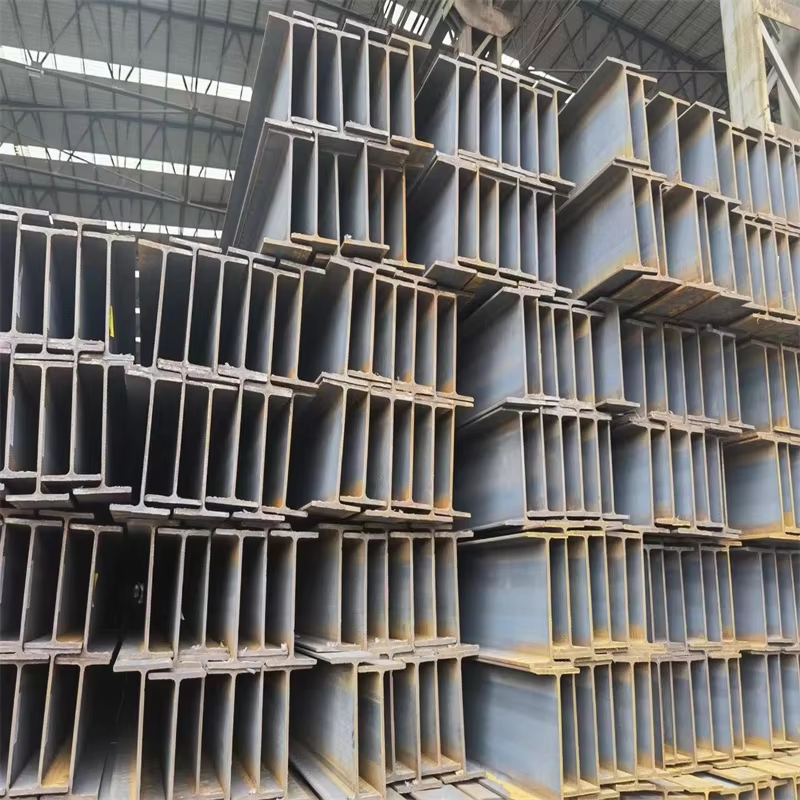
Welded H beam is a critical structural steel product used in construction, bridges, industrial plants, and large-scale infrastructure projects. Unlike hot rolled H beams, which are produced in fixed cross-sectional sizes by rolling mills, welded H beams are fabricated by welding together separate steel plates to form the H-shaped cross section. This manufacturing method allows for customized flange widths, web heights, and thickness combinations that may not be available in standard rolled profiles. For steel buyers, understanding how welded H beams are made helps in evaluating product quality, specifying the right dimensions, and selecting a reliable supplier who follows proper welding and testing procedures.
Plate Cutting and Edge Preparation
The manufacturing process begins with selecting qualified steel plates that meet the required grade and dimensional specifications. Common grades for welded H beams include Q235B and Q345B, based on GB/T 11263 standards, or ASTM A572 Grade 50 for international projects. The plates are first cut to size using numerical control flame cutting or plasma cutting equipment. The flange plates and web plate are cut according to the designed cross-sectional dimensions. After cutting, the plate edges that will be welded must undergo edge preparation. This typically involves beveling the edges to form a V-groove or U-groove weld preparation. Proper edge preparation ensures full penetration during the subsequent welding process and reduces the risk of incomplete fusion or internal defects. The tolerance for plate dimensions and edge bevel angles is strictly controlled, usually within ±1mm for length and width, to ensure accurate final beam dimensions.
Assembly and Tack Welding
Once the plates are cut and edge-prepared, they are assembled into the H-shaped configuration using a dedicated H-beam assembly machine. The web plate is positioned vertically between the two flange plates, forming the characteristic H cross section. The assembly machine uses hydraulic pressure to hold the plates in correct alignment while the gap between the web and flanges is checked for consistency. Tack welding is then performed at regular intervals along both fillet weld seams to temporarily hold the assembly together before full welding. Proper alignment during assembly is essential. Any misalignment between the web and flanges can result in uneven stress distribution in the finished beam. The assembly process also includes checking for angular distortion tendency, as the welding heat will cause the beam to deform if not properly constrained during welding.
Submerged Arc Welding (SAW) Process
The core of welded H beam production is the submerged arc welding process. SAW is a high-quality, high-efficiency welding method that uses a continuously fed consumable electrode and a granular flux that covers the welding area. The flux shields the weld pool from atmospheric contamination, produces a slow-cooling weld metal, and helps shape the weld bead. For H beam production, automatic SAW welding lines are used, where the beam is positioned and the welding heads move along the beam length to deposit the fillet welds connecting the web to each flange. Welding is typically performed on both sides simultaneously or in sequence, depending on the beam size and production setup. The welding parameters—current, voltage, welding speed, and flux type—are carefully controlled to ensure consistent weld quality. For Q345B steel, preheating may be required when the plate thickness exceeds certain limits specified in welding procedure specifications. After welding, the weld beads are inspected for surface defects such as undercut, overlap, or excessive reinforcement.
Straightening and Dimensional Correction
Welded H beams inevitably experience thermal distortion due to the heat input from welding. The beam may develop camber, sweep, or twist that must be corrected before the product can be delivered. Straightening is performed using a hydraulic straightening machine that applies controlled pressure to bring the beam back to the required straightness tolerance. The straightening process typically involves multiple passes, with dimensional measurements taken after each pass. According to GB/T 11263 and ASTM A6 specifications, the straightness tolerance for H beams is usually 1/1000 of the beam length, with stricter tolerances available on request. In addition to straightening, the beam ends are cut to square using flame cutting or saw cutting, and any remaining weld spatter or surface irregularities are ground smooth. Dimensional inspection at this stage verifies flange width, web height, flange thickness, web thickness, and overall length against the order specifications.
Quality Testing and Inspection
Quality assurance is a fundamental part of welded H beam manufacturing. Every production batch is subject to multiple inspection steps. Visual inspection checks the weld surface for cracks, porosity, slag inclusion, and incomplete fusion. Non-destructive testing (NDT) methods are applied to detect internal defects. Ultrasonic testing (UT) is commonly used to scan the welded joints for lack of fusion, incomplete penetration, or internal cracks. For projects with higher inspection requirements, magnetic particle testing (MT) or radiographic testing (RT) may also be specified. Mechanical property testing includes tensile tests, impact tests at specified temperatures, and bend tests on samples taken from the parent plate or welded joints. Chemical composition is verified through mill test reports (MTRs) that accompany each batch of raw steel plates. For welded H beams intended for seismic applications or critical structures, additional testing such as Charpy V-notch impact testing at low temperatures may be required.
Welded H Beam vs Hot Rolled H Beam: Key Differences
A common question among steel buyers is whether to specify welded or hot rolled H beams. The choice depends on project requirements, available sizes, delivery time, and cost. Hot rolled H beams are produced by hot rolling steel billets in a rolling mill, which limits the available cross-sectional sizes to standard series. Welded H beams can be produced in virtually any customized cross section within equipment capacity, making them suitable for non-standard designs. In terms of mechanical properties, both products can meet the same strength requirements when manufactured correctly. However, welded H beams have weld seams that require proper welding procedure qualification and inspection. Hot rolled beams have no weld seams and may be preferred for applications where welding on site is extensive and the presence of factory welds is a concern. Delivery time for welded H beams can be longer because each order requires plate cutting, assembly, and welding, while hot rolled beams can be supplied from stock for common sizes.
Common Steel Grades for Welded H Beams
Welded H beams are produced in a range of steel grades to match different design requirements. In the Chinese market, Q235B and Q345B are the most widely used grades. Q235B offers a minimum yield strength of 235 MPa and is suitable for general structural applications where load demands are moderate. Q345B provides a minimum yield strength of 345 MPa and is commonly specified for heavy structures, multi-story buildings, and bridges. Both grades are covered by GB/T 1591 and GB/T 700 standards. For projects following American standards, ASTM A572 Grade 50 and ASTM A992 are equivalent choices with good weldability and toughness. When specifying welded H beams for low-temperature environments or seismic zones, grades with improved low-temperature toughness, such as Q345D or Q345E, should be considered. The choice of grade affects welding consumable selection, preheating requirements, and inspection standards, so it should be coordinated with the fabrication and erection plan.
Sourcing Example: Industrial Plant Expansion in Southeast Asia
A real-world example illustrates the value of understanding welded H beam manufacturing. An industrial plant expansion project in Southeast Asia required H beams with a flange width of 400mm and web height of 600mm, a non-standard size not readily available as hot rolled sections. The project team sourced welded H beams from a Tianjin-based supplier who fabricated the beams using Q345B steel plates. The supplier provided the welding procedure specification (WPS), welding procedure qualification record (PQR), and mill test reports for both the plates and the finished beams. Ultrasonic testing was performed on 100% of the weld length. The beams were delivered with straightness within 2mm over 6 meters, meeting the project's erection tolerance. By choosing welded H beams, the project avoided the need for custom rolling, which would have required a minimum order quantity of several hundred tons and a lead time of 45 to 60 days. The welded H beam option allowed a smaller order quantity and a delivery time of 15 to 20 days.
Frequently Asked Questions
What is the maximum length of welded H beam that can be produced?
Welded H beams are typically produced in lengths up to 12 meters in a single piece, constrained by workshop dimensions and transportation limits. Longer beams can be produced by field splicing, which requires a splicing design approved by the structural engineer. Some manufacturers offer lengths up to 15 meters if workshop space and transport permits.
Are welded H beams as strong as hot rolled H beams?
When manufactured in accordance with qualified welding procedures and inspected properly, welded H beams can achieve mechanical properties equivalent to hot rolled H beams. The strength of the finished beam depends on the parent plate grade, the welding quality, and the inspection standards followed. Buyers should request the mill test report and welding qualification documents to verify compliance.
How can I verify the quality of a welded H beam before accepting delivery?
Buyers can verify quality through a combination of document review and on-site inspection. Request the mill test report for the steel plates, the welding procedure specification, and the inspection report. On-site checks include measuring dimensions with a steel tape and caliper, checking straightness with a straightedge, and observing the weld bead appearance. For critical projects, hiring a third-party inspection agency to witness the NDT and dimensional inspection is recommended.
Table of Contents
- Plate Cutting and Edge Preparation
- Assembly and Tack Welding
- Submerged Arc Welding (SAW) Process
- Straightening and Dimensional Correction
- Quality Testing and Inspection
- Welded H Beam vs Hot Rolled H Beam: Key Differences
- Common Steel Grades for Welded H Beams
- Sourcing Example: Industrial Plant Expansion in Southeast Asia
- Frequently Asked Questions