
 EN
EN
 AR
AR
 HR
HR
 CS
CS
 DA
DA
 NL
NL
 FI
FI
 FR
FR
 DE
DE
 EL
EL
 IT
IT
 JA
JA
 KO
KO
 NO
NO
 PL
PL
 PT
PT
 RU
RU
 ES
ES
 TL
TL
 ID
ID
 SR
SR
 SK
SK
 UK
UK
 VI
VI
 SQ
SQ
 HU
HU
 MT
MT
 TH
TH
 TR
TR
 FA
FA
 MS
MS
 MK
MK
 HY
HY
 AZ
AZ
 KM
KM
 LA
LA
 MN
MN
 MY
MY
 KK
KK
 UZ
UZ

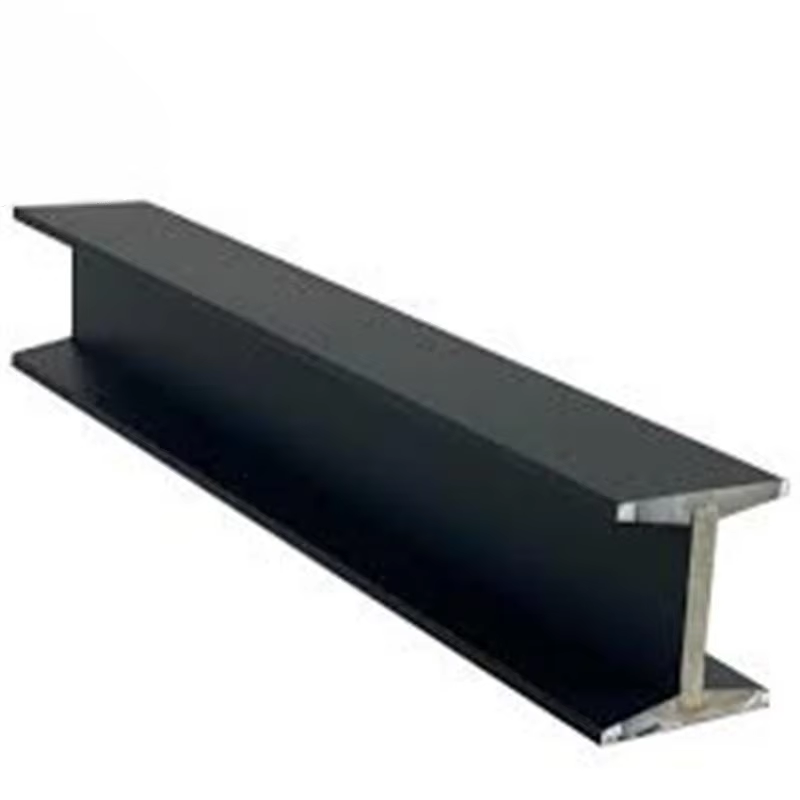
At Rarlon Steel, I've been in the structural steel business for a number of years, and I have been in charge of the production and distribution of premium steel profiles. For one to understand H section steel manufacturing, knowing the machines and equipment is not enough. it is important to achieve a proper balance between the metallurgy and structure. This is for the contract or material supplier to have the right building material or the engineer tasked with the high rise building design or construction. This is an in-depth guide to the designing of these economic section H beam.
Choosing and Processing of the Raw Materials
The first step in H section steel production is selection of raw materials and it actually begins in the iron ore, in the scrap steel and in the alloying elements like Carbon, Manganese and Silicon. At Rarlon Steel, we place emphasis on the Melting and Refining phase of production. in this phase the raw materials are processed in a Basic Oxygen furnace (BOF) or in an Electric Arc furnace (EAF) until they are in the molten state. while doing this, we have to control the desired chemical composition to the Compliance levels of ASTM A36, JIS G3192 or EN 10025 standards. This is to ensure that the H section steel produced has the desired yield strength and ductility that is required for construction and building heavy materials.
Continuous Casting into Semi-Finished Blooms
Molten steel is first cast into semi-finished shapes known as "blooms" or "billets" after passing our quality tests. We apply 'Continuous Casting' technology. This means the molten steel is allowed to form a solidified continuous strand. This technique is better than classical ingot casting because it allows for a more consistent and better uniform internal structure. When considering h section steel, we cast big rectangular blooms that would be the first in the ralling sequence. We have to protect the bloom because from this point, any internal porosity will compromise and will be a huge threat to the structural integrity and safety of the completed beam.
Reheating and Scale Removal
Before the true shaping of blooms is done, the blooms have to be reheated in a walking beam furnace. We raise the temperature of the steel to about 1100 to as high as 1250. Once this occurs, the steel will become plastic and can be deform. An issue that occurs during such heating of the steel is the generation of “mill scale,” a form of oxidized iron, on the surface of the steel. At Rarlon Steel, we have a high-pressure water blasting system to remove this. This is a crucial step to producing h section steel because it ensures a defect free surface and that surface defects will not be rolled into the steel.
Universal Rolling Process
The most important and crucial stage in the manufacturing process of h section steel is called the Universal Rolling process. For example, I-beams can be manufactured in a, what is called, a two-high mill. However, H-beams must use a Universal Mill. This is because a Universal Mill has both horizontal rolls and vertical rolls. These rolls can be used simultaneously to compress both the web and the flanges. Because flanges of h section steel beams are wide and parallel, the use of vertical rolls is important to control the thickness and width of flanges independently from the web. This type of multi-axis deformation improves the microstructure of the steel and provides a better load-bearing capacity than welded steel.
Cooling and straightening
After finishing milling, the h section steel is red-hot and is usually slightly warped from the milling process. In order to control the microstructure of the steel, we utilize a controlled cooling process along a “run-out table”. After completing the controlled cooling, the beams will enter a multi-roll straightening machine (usually 8 to 9 rolls). This final step is crucial to ensure all residual stress or curvature is removed from the steel beams. It is important to us that every piece of h section steel is extremely straight. This allows us to provide our customers with a much easier assembly process, and allows us to reduce the time and labor costs associated with steel welding by up to 25%.
Final Inspection and Surface Treatment
Before we complete manufacturing a product, we do testing and finishing to a rough degree. Each one of our h section steel blocks is subject to ultrasonic testing and a check of mechanical properties to verify that we keep our promises. Projects with higher corrosion resistance requirements, like bridges or coastal plants, need further surface treatment, such as hot dip galvanizing. Rarlon h section steel beams leave the warehouse after passing a check for dimensional accuracy, weight, strength ratio, and surface integrity, which fulfills our promise to provide exceptional quality in global infrastructure partnerships.