
 EN
EN
 AR
AR
 HR
HR
 CS
CS
 DA
DA
 NL
NL
 FI
FI
 FR
FR
 DE
DE
 EL
EL
 IT
IT
 JA
JA
 KO
KO
 NO
NO
 PL
PL
 PT
PT
 RU
RU
 ES
ES
 TL
TL
 ID
ID
 SR
SR
 SK
SK
 UK
UK
 VI
VI
 SQ
SQ
 HU
HU
 MT
MT
 TH
TH
 TR
TR
 FA
FA
 MS
MS
 MK
MK
 HY
HY
 AZ
AZ
 KM
KM
 LA
LA
 MN
MN
 MY
MY
 KK
KK
 UZ
UZ

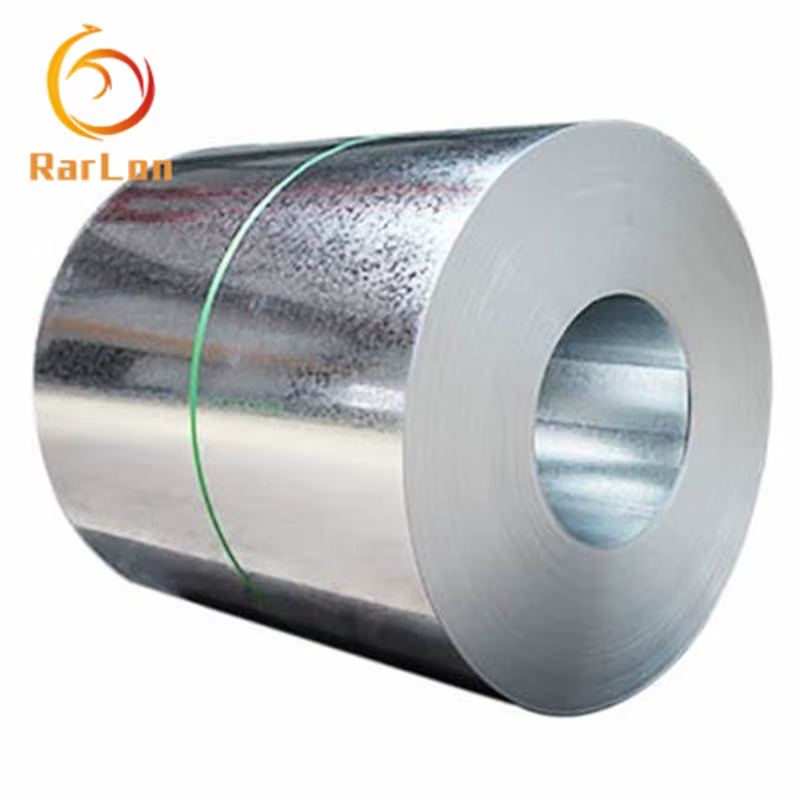
Certification and Traceability: Validating HRC Hot Rolled Coil Compliance
Interpreting Mill Test Reports (MTRs) for HRC Hot Rolled Coil
Mill Test Reports or MTRs act as the basic quality documentation for HRC hot rolled coils, showing what chemicals are present, how strong the material is mechanically, and tracking where each batch comes from. These reports check if the steel meets important industry standards such as ASTM A568, EN 10025-2, and ISO 9444. Even small differences matter here. For instance, a variation of around 50 MPa in yield strength or just 0.05% change in carbon content could mean the product doesn't meet requirements. When working on structures, comparing tensile strength numbers (which should be at least 370 MPa according to ASTM A36) with elongation rates (around 22% minimum) gives engineers an idea of how well the material will hold up during cold forming processes. Traceability codes are really important too because they track every step of production from when the metal was melted all the way through to the finished coil. This kind of detailed record keeping isn't optional in industries where failures can have serious consequences, especially in areas like energy projects and offshore building work where safety is paramount.
Why Third-Party Verification Is Non-Negotiable for Critical HRC Hot Rolled Coil Applications
Material Test Reports give us the basic info we need, but when it comes to really important applications, getting checks from outside experts makes all the difference. Certified laboratories go beyond what's on paper to verify things like chemical makeup (look for CEV below 0.43% if good welding matters), check dimensions are within half a millimeter of what they should be, and hunt down those tiny flaws that can't be seen with the eye alone such as hidden cracks or clusters of impurities deep inside the material. For anything that supports weight or bears stress, these extra checks aren't just nice to have—they're absolutely necessary because failing materials can lead to disasters both dangerous and expensive. More manufacturers now are starting to adopt blockchain technology for tracking products throughout their journey from factory floor to final installation site. These digital records create tamper-proof timelines that help track everything back, but nobody thinks this replaces the real world testing that still needs to happen.
Mechanical Performance: Key Indicators of Reliable HRC Hot Rolled Coil
Yield Ratio and Tensile Strength Thresholds That Predict Cold Forming Failure
The yield ratio (YR), which is basically just dividing yield strength by tensile strength, tells us a lot about how reliable a material will be during cold forming processes. When this ratio goes over 0.85, there's a much higher chance of fractures happening during operations like bending or stamping. And if it gets past 0.88, we start seeing cracks form earlier than expected, particularly when the tensile strength drops below 400 MPa. According to those industry standards ASTM A36 and EN 10025-2, structural grade HRC needs at least 370 MPa tensile strength. But here's the catch: materials that go beyond 550 MPa tend to lose their ductility, meaning they don't stretch as well and become more prone to breaking suddenly. Looking at actual data from last year's automotive industry report on chassis failures, around one in five problems traced back to coils where both YR was above 0.88 and tensile strength stayed under 400 MPa. That's why engineers need to look at YR together with other properties like strength and elongation instead of treating it as some standalone metric.
Impact Toughness at Low Temperatures: Assessing Structural Integrity in Harsh Environments
When working in extremely cold conditions, what really matters for structural integrity isn't just how strong materials are when they're not moving around, but their ability to withstand impacts. The standard test method across industries is Charpy V-notch testing done at minus 20 degrees Celsius. For structures built to handle Arctic conditions, these tests need to show at least 27 joules of energy absorption. Research from last year's Arctic Engineering Journal shows that steel alloys with carbon equivalent over 0.45 tend to perform about 15 percent worse on these impact tests when temps drop below freezing. That's why getting independent lab results following ISO 148 standards becomes absolutely essential for things like offshore oil platforms, liquefied natural gas storage facilities, and buildings constructed in polar regions. These places face unexpected temperature changes and physical stresses all the time, so materials must resist breaking suddenly when subjected to real world forces instead of just sitting there looking good in controlled environments.
Chemical Composition and Weldability: Ensuring Grade Integrity in HRC Hot Rolled Coil
Carbon Equivalent (CEV) Limits and Their Direct Link to Weld Cracking Risk
The Carbon Equivalent value (CEV) is still considered one of the best indicators when it comes to predicting hydrogen cracks in welded HRC hot rolled steel. When materials go over those CEV limits - around 0.45 for ISO P460NH grades or hitting 0.50 for ASTM A36 steels - there's about an 80% jump in cracking risks according to recent ASM International reports from last year. What happens here is pretty straightforward. As welds cool down, they just can't absorb all that thermal stress anymore. And things get worse when there's too much carbon mixed in with manganese, chromium, and those other alloying agents that make metals harder but less forgiving during welding processes.
| CEV Range | Weldability Risk | Recommended Action |
|---|---|---|
| <0.40 | Low | Standard procedures |
| 0.40–0.50 | Moderate | Preheat required |
| >0.50 | High | Specialized alloys |
For critical infrastructure, CEV must be verified via MTRs—and sulfur and phosphorus impurities held below 0.025% each—to mitigate hot-shortness and ensure sound fusion zones. Third-party compositional analysis provides enforceable assurance against grade substitution, directly supporting compliance with ASME BPVC Section II and EN 10216-2 for pressure-containing applications.
Dimensional Accuracy and Surface Defects: Practical Visual and Metrological Checks for HRC Hot Rolled Coil
Identifying Tower Shape, Sickle Bend, and Edge Wave Within ISO/ASTM Tolerance Bands
When it comes to HRC hot rolled coil, tower shape (which is basically longitudinal curvature), sickle bend (the transverse kind of curve), and edge wave (that wavy look along edges) stand out as major dimensional problems. If these issues aren't caught early on, they can really mess things up downstream. We've seen mills come to a grinding halt because of jammed equipment, parts getting distorted during processing, and serious alignment problems when welding components together. Visual checks will spot the obvious stuff, but for proper quality control we need precise measurements. That means bringing out the big guns like laser profilometers, optical scanners, and those trusty calibrated calipers. Standards bodies like ISO 9444 and ASTM A568/A568M set the benchmarks here. Take edge wave for instance—it needs to stay under 3 mm per meter or else rolling lines just stop working properly. And if sickle bend exceeds half a percent of the coil's width? Progressive die stamping operations start having registration nightmares. Rejecting bad batches isn't just following protocol. It saves manufacturers thousands in rework costs, keeps warranty claims down, and most importantly avoids failures in service where flatness matters critically for how structures fit together and distribute loads throughout their lifespan.
FAQ Section
What is the importance of Mill Test Reports (MTRs) for HRC hot rolled coils?
MTRs are crucial as they provide verification of chemical composition, mechanical properties, and traceability of the steel, ensuring compliance with industry standards like ASTM A568 and EN 10025-2.
Why is third-party verification necessary for certain applications?
Third-party verification verifies aspects not clear on paper, such as hidden cracks and precise chemical makeup, to ensure materials can safely support weight and stress, preventing potentially disastrous failures.
What challenges arise from high yield ratios and how can they be mitigated?
High yield ratios can lead to fractures during processes like bending, especially if tensile strength is low. This risk can be mitigated by considering yield ratio in conjunction with tensile strength and elongation properties.
How does carbon equivalent value (CEV) influence weldability in HRC hot rolled steel?
CEV is an indicator of weldability. Higher CEV increases the risk of weld cracks as the material may not handle thermal stress effectively. Keeping CEV within specified limits reduces this risk, especially in grades like ISO P460NH and ASTM A36.
Table of Contents
- Certification and Traceability: Validating HRC Hot Rolled Coil Compliance
- Mechanical Performance: Key Indicators of Reliable HRC Hot Rolled Coil
- Chemical Composition and Weldability: Ensuring Grade Integrity in HRC Hot Rolled Coil
- Dimensional Accuracy and Surface Defects: Practical Visual and Metrological Checks for HRC Hot Rolled Coil